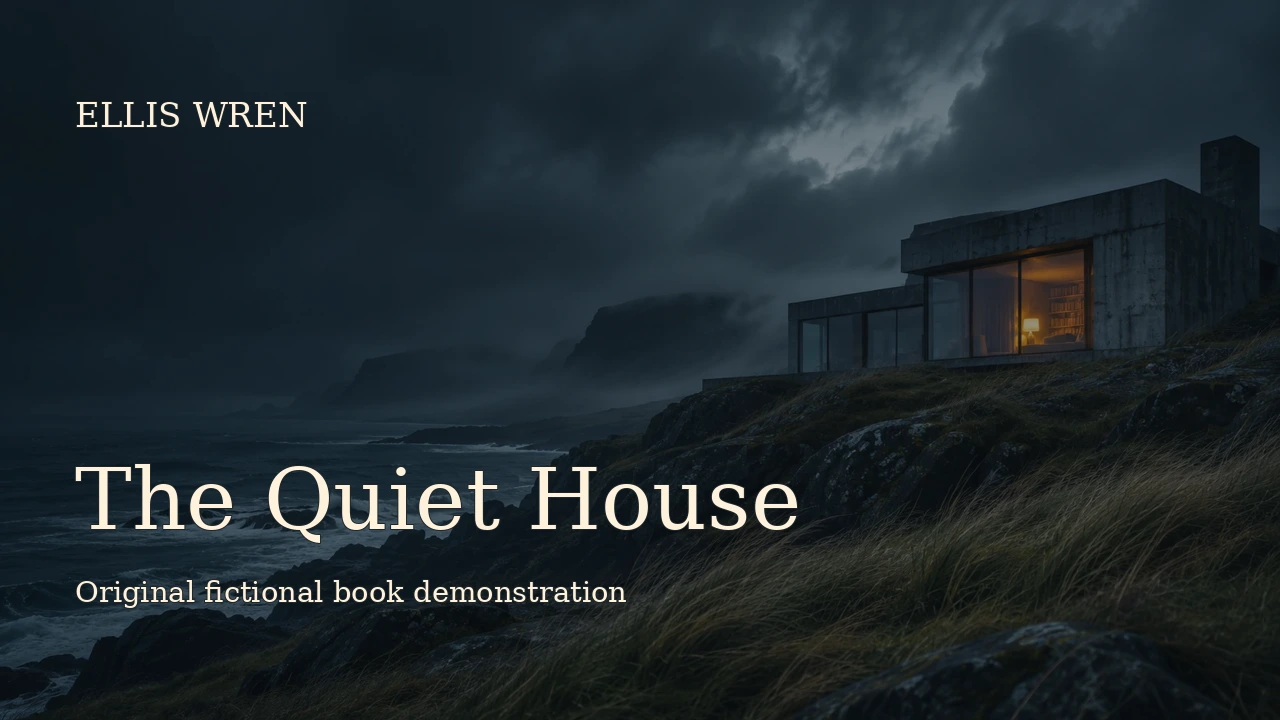
 Ellis Wren · Psychological thriller
 Rowan Hale · Practical nonfiction
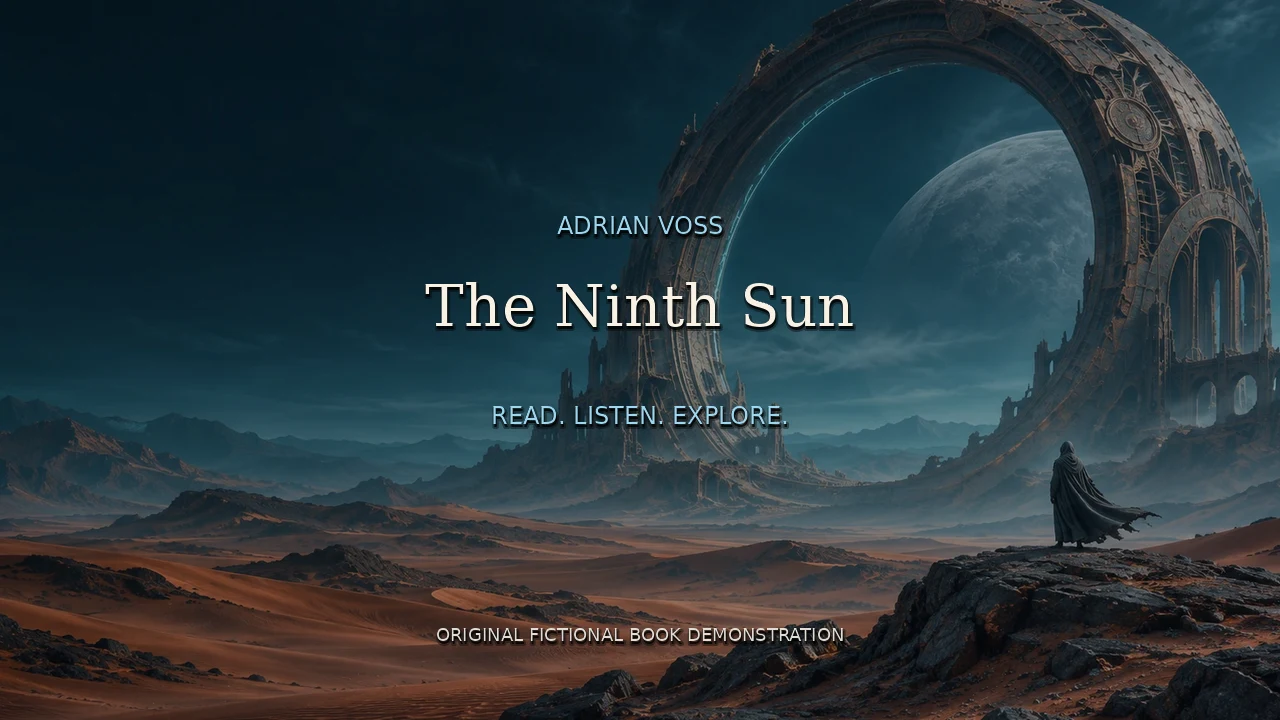 Adrian Voss · Speculative fiction
 Emilia Vale · Contemporary romance
Position the book
We read the synopsis and a representative passage, then identify the reader, the genre promise and the strongest reason to open the book. The result is a one-page positioning brief.
Bring your biography, books, reading samples and retailer links together. Start with the reader you want to reach.
Hear a thriller before you read it, step into an imagined world, or try a field exercise from a nonfiction guide. Each sample shows a different way to earn a reader’s attention.
We design for a reader making a decision. Every element has a job along the way.
We read the synopsis and a representative passage, then identify the reader, the genre promise and the strongest reason to open the book. The result is a one-page positioning brief.
For a mystery, we look for the moment the ordinary world breaks. For nonfiction, we look for a lesson the reader can use today. That choice shapes the headline, excerpt and audio direction.
We map every edition and retailer. A reader arriving from an interview lands on the featured title, can sample it immediately, and sees a clearly labelled choice of formats and shops.
We check the journey on a phone, test the sample and trace each retailer link. Where measurement is agreed, we distinguish sample engagement and outbound clicks from sales confirmed by a retailer.
Imagine a novelist discussing a missing letter on a podcast. A listener follows the show-notes link. We would open on the letter, offer the scene in text and audio, then place paperback, ebook and audiobook choices beside the excerpt. Sending that listener to a general biography would make them search for the very book they came to find.
Explore a thriller reading room